How to Manage Personal Budgets: Cent Precision and the Safe-to-Spend Rule
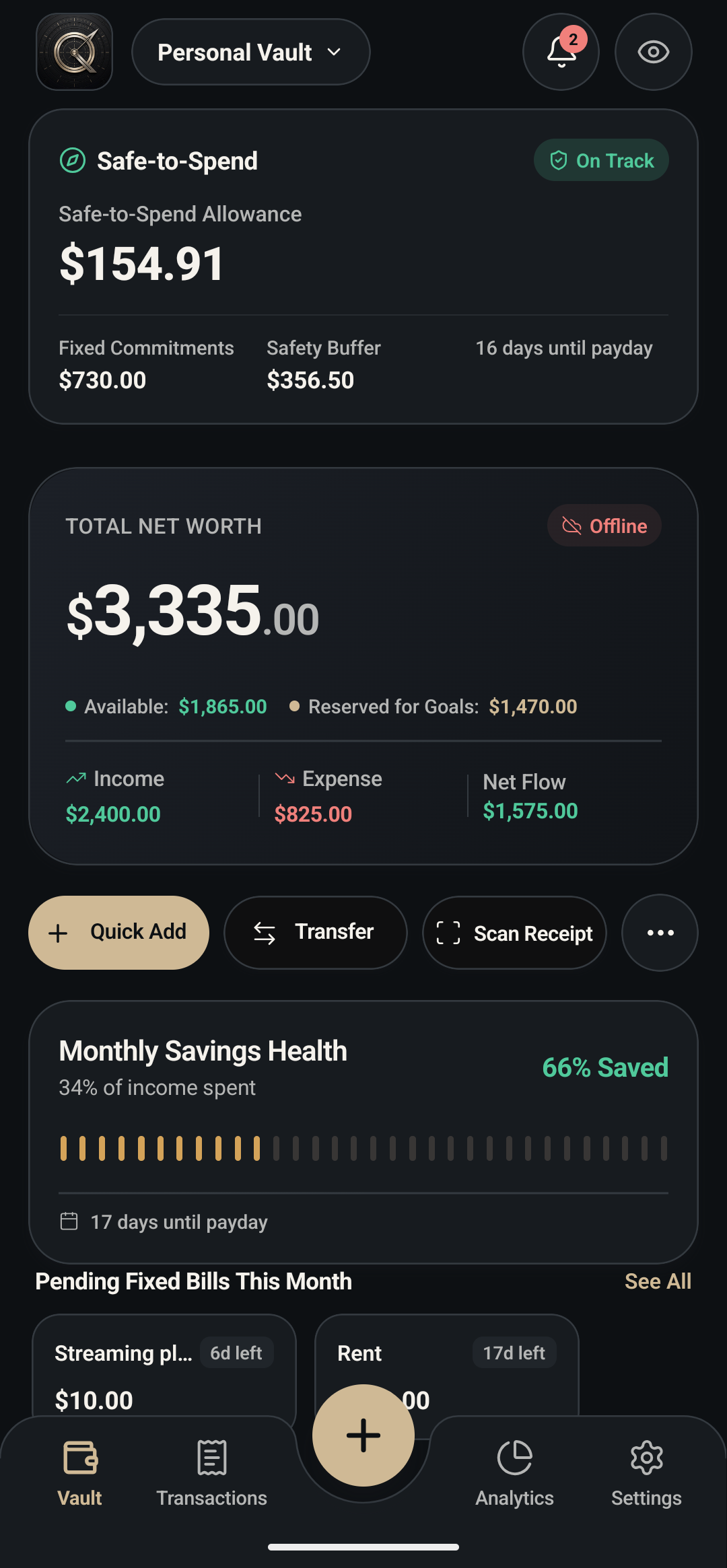
Traditional budgeting fails because humans resist endless micro-restrictions. Real financial freedom is not about regretting yesterday; it is knowing your dynamic Safe-to-Spend limit today.
1. Backward Accounting vs. Forward-Looking Daily Limits
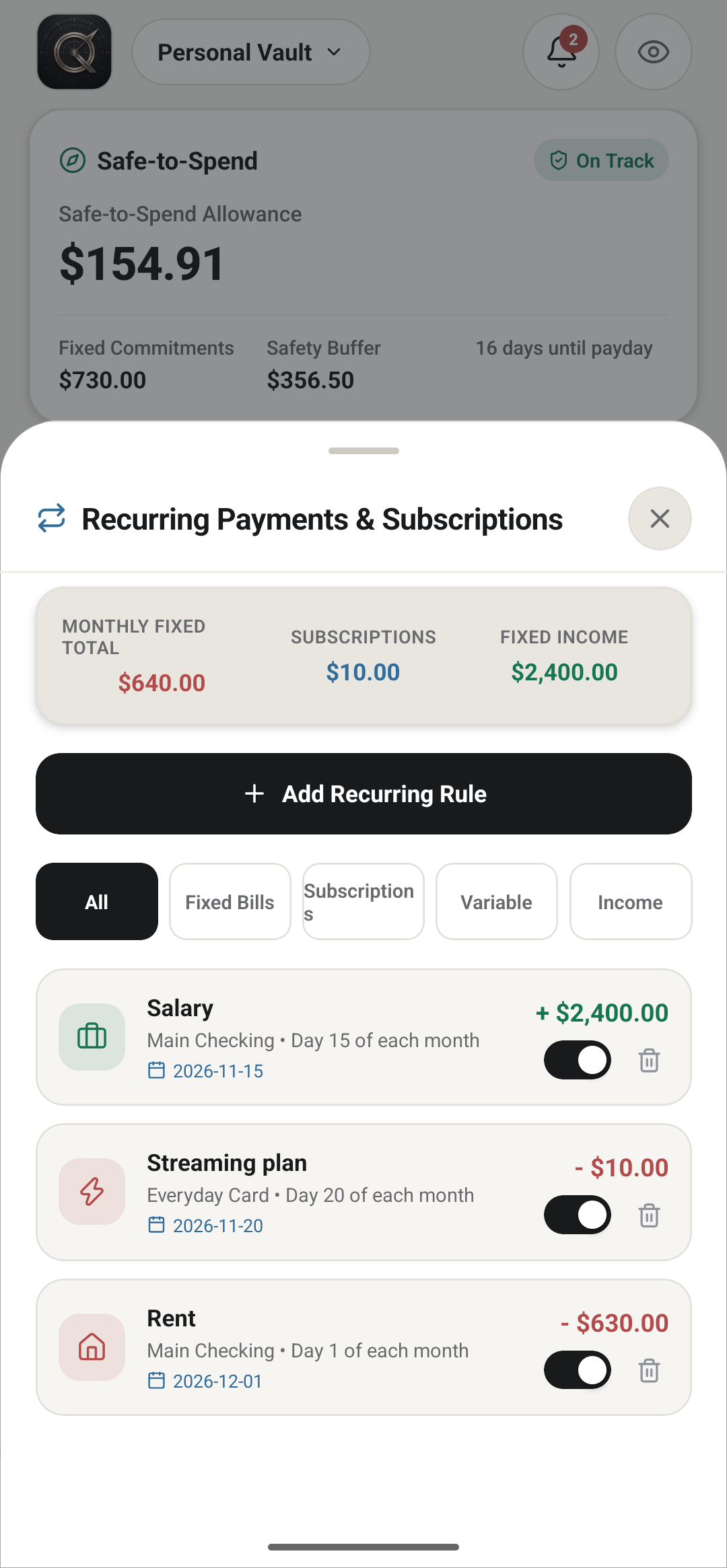
Reviewing past bank statements breeds regret without changing behavior. The Safe-to-Spend approach isolates fixed dues and emergency savings first, dividing net discretionary cash across remaining days.
2. Cent Precision: Integer Storage vs Float Rounding
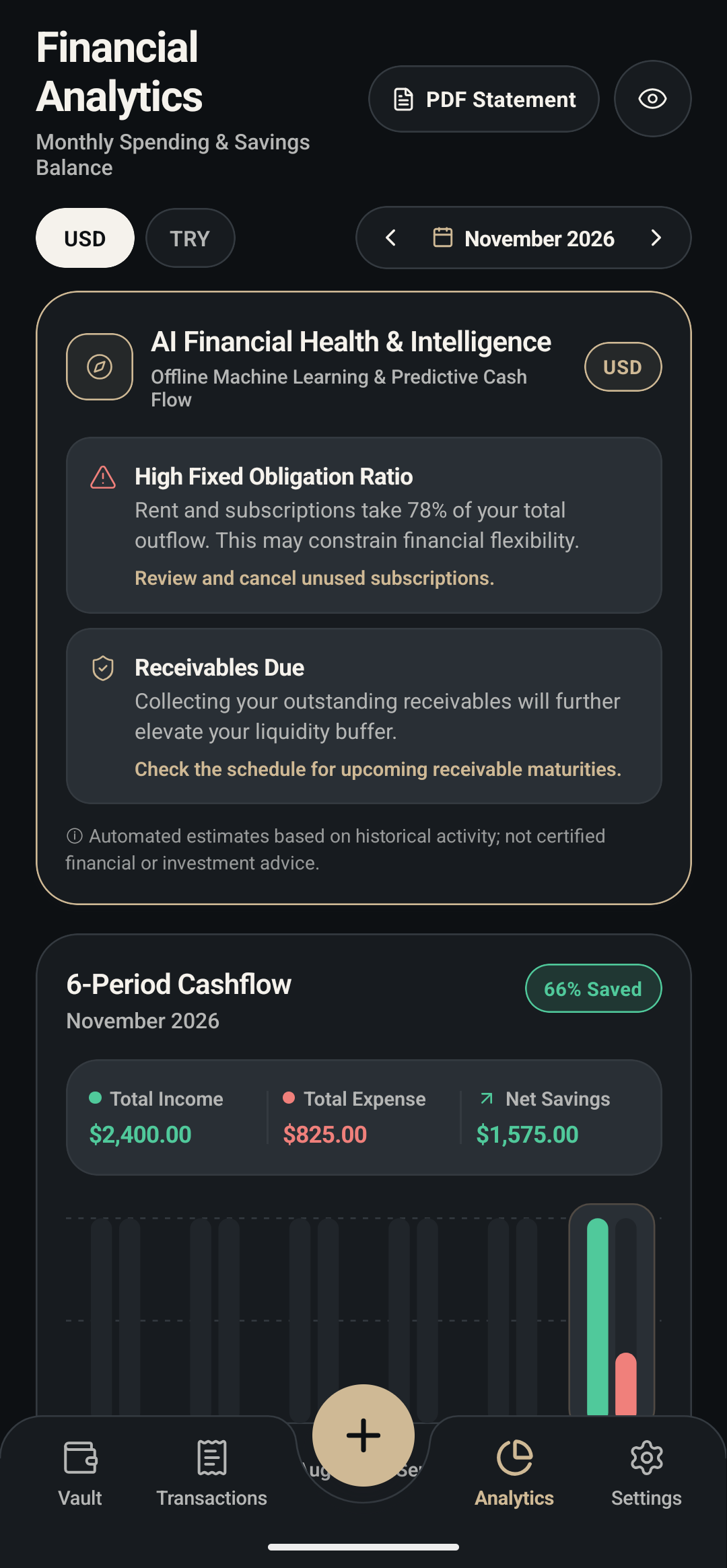
Most apps store money as floating-point decimals, introducing cumulative rounding drifts. Qassadar records all balances as integer cents, eliminating rounding errors entirely.
Frequently Asked Questions
What happens if I exceed my daily Safe-to-Spend limit?
Qassadar never penalizes you; it gracefully rebalances the excess across remaining days till payday.
How does this method help build emergency funds?
Savings are partitioned immediately upon income arrival, shielding your reserves from everyday impulse spending.
Try it before it reaches the stores.
The core app is free. Pro has no ads. We don’t sell your data, and we don’t connect to your bank.
Related Financial Guides
What is an Offline Expense Tracker? Why You Should Never Share Bank Credentials
Architecture and privacy advantages of offline personal finance apps that work without bank credentials or active internet connections.
CREDIT CARDS & STRATEGYHow to Master Credit Card Spending: Billing Cycle Optimization Strategies
A strategic guide to managing credit card billing cycles, installment debts without losing principal visibility, and avoiding minimum payment traps.
FAMILY & MULTI-WORKSPACEFamily Budget & Shared Vault Management: Transparent Finances Without Clutter
Manage shared household expenses transparently while keeping personal allowances private using multi-workspace isolation.